
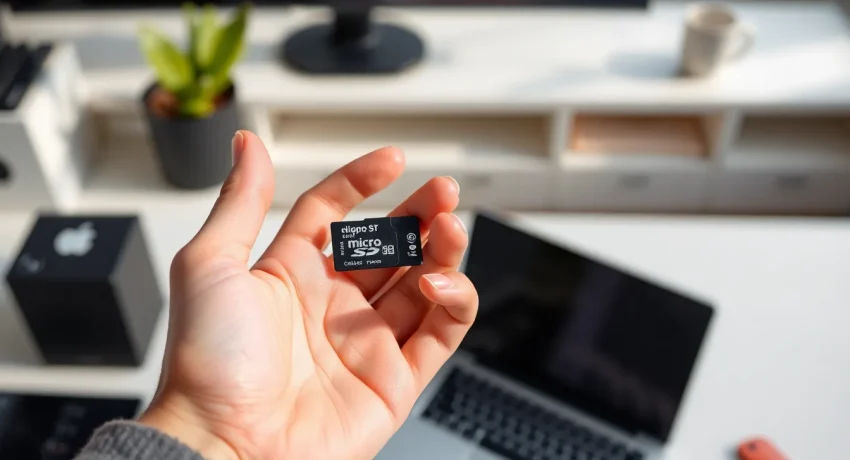

In today’s digital age, the demand for storage continues to grow as devices become more advanced and data-heavy. From photos and videos to applications and games, users often find themselves running out of space. Expandable storage options have emerged as a practical solution, allowing individuals to enhance their device’s capacity without breaking the bank.
Whether it’s through microSD cards, external hard drives, or cloud storage, these options offer flexibility and convenience. They empower users to choose how much space they need and how they want to manage their data. As technology evolves, understanding these storage solutions becomes essential for maximizing device performance and ensuring seamless access to important files.
Overview of Expandable Storage Options
Expandable storage options offer practical solutions for users facing storage limitations on their devices. These options include microSD cards, external hard drives, and cloud storage services.
MicroSD Cards
MicroSD cards provide a compact solution for smartphones, tablets, and cameras. They range in capacity from 2GB to 1TB. Users benefit from their portability and affordability, as they allow for easy data transfer between devices.
External Hard Drives
External hard drives offer larger storage capacities ranging from 500GB to several terabytes. They connect via USB or Thunderbolt, providing high-speed data transfer. These drives support file backups and data archives, making them ideal for users with extensive files.
Cloud Storage
Cloud storage services, such as Google Drive, Dropbox, and OneDrive, enable users to store and access data remotely. These services generally offer various plans, including free tiers and paid subscriptions up to several terabytes. Users appreciate the convenience of accessing files from multiple devices while ensuring data safety through encryption.
Each option provides distinct advantages. Users can select the most suitable solution based on their specific needs and device compatibility. Understanding these expandable storage options enhances management of important files and overall device performance.
Types of Expandable Storage
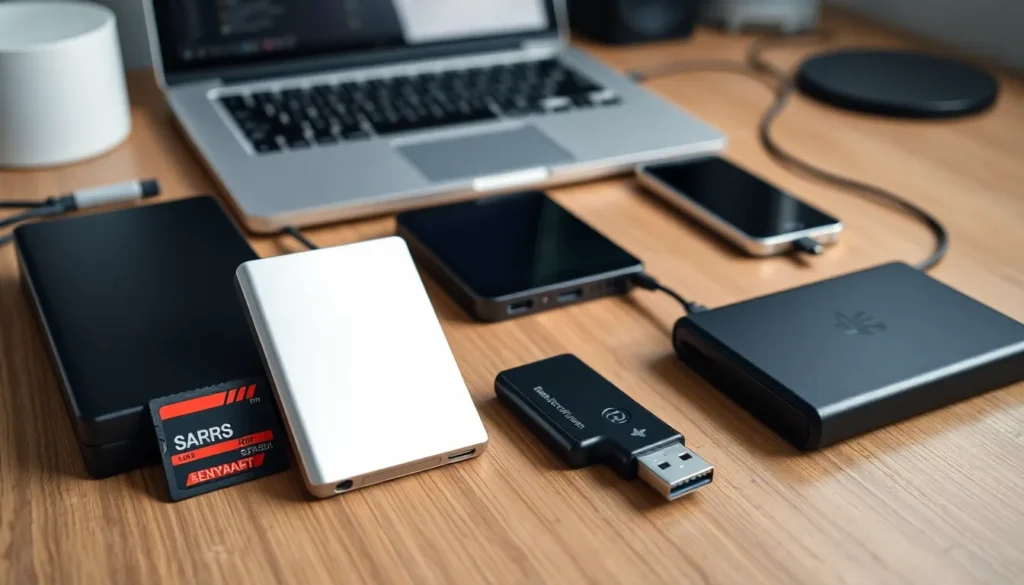
Expandable storage options provide flexibility in managing large amounts of data. The following types each offer distinct benefits tailored to various user needs.
Memory Cards
Memory cards, including microSD, SD, and CompactFlash formats, serve as compact storage solutions for devices like smartphones, tablets, and cameras. MicroSD cards range from 2GB to 1TB, making them versatile for everyday use. Devices with expandable slots allow users to enhance their storage without needing complex installations. High-speed models support fast data transfer rates, essential for high-resolution photos and 4K video recording.
External Hard Drives
External hard drives offer substantial storage capacities, spanning from 500GB to several terabytes. Ideal for backing up files, these drives connect efficiently via USB, Thunderbolt, or eSATA interfaces. Many external drives come with built-in encryption and backup software, enhancing data security. Users frequently choose portable models for on-the-go needs, while desktop variants provide larger capacities for more stationary setups.
USB Flash Drives
USB flash drives, also known as thumb drives or jump drives, provide a practical and portable solution for data transfer. Capacities typically range from 2GB to 2TB, catering to diverse storage requirements. These devices connect easily to computers and other USB-enabled gadgets, encouraging data mobility. Many USB drives include features like password protection and data recovery software, reinforcing user data security.
Benefits of Using Expandable Storage
Expandable storage options offer significant advantages for users managing increasing data demands. They enhance device usability and accommodate diverse storage requirements.
Increased Storage Capacity
Increased storage capacity remains a primary benefit of expandable storage options. MicroSD cards provide capacities up to 1TB, while external hard drives can store anywhere from 500GB to several terabytes of data. This allows users to maintain large libraries of photos, videos, applications, and games without sacrificing device performance. Cloud storage services also contribute by offering plans with varying capacities, ensuring users can expand their storage as needed without physical limitations.
Flexibility and Portability
Flexibility and portability define the usability of expandable storage solutions. MicroSD cards and USB flash drives can be easily transferred between devices, making them perfect for on-the-go users. External hard drives, while slightly bulkier, still offer portability for users needing high-capacity options. Cloud storage further enhances flexibility, as it enables remote access to files from any internet-connected device. This adaptability allows users to store and retrieve data seamlessly across multiple platforms.
Considerations When Choosing Expandable Storage
Choosing the right expandable storage requires careful evaluation of various factors. Two crucial considerations are compatibility and speed performance.
Compatibility
Compatibility matters when selecting expandable storage options. He or she should verify that the chosen storage device works with their existing hardware. Many devices, such as smartphones, tablets, and cameras, have specific formats, such as microSD, SD, or USB. It’s essential to check the device specifications to avoid purchasing incompatible storage. Some devices support specific capacities; for instance, certain smartphones can only utilize microSD cards up to 512GB. Always consult the manufacturer’s guidelines for compatibility requirements.
Speed and Performance
Speed and performance play a significant role in the efficiency of expandable storage. It’s important to assess the read and write speeds of memory cards and external drives, particularly for tasks that require fast data access, like video editing or gaming. For example, UHS-I and UHS-II ratings indicate high-speed capabilities in microSD cards, enhancing the data transfer process. External hard drives can also vary in speed, with SSDs (solid-state drives) typically offering faster performance than traditional HDDs (hard disk drives). Knowing these specifications helps in choosing storage that meets specific use cases, ensuring optimal performance.
Expandable storage options provide essential solutions for managing the ever-growing demand for data in today’s digital landscape. By leveraging microSD cards, external hard drives, and cloud storage, users can effectively enhance their device capabilities without compromising performance.
These options not only offer increased storage capacity but also deliver flexibility and portability, making them ideal for various needs. With careful consideration of compatibility and speed, individuals can choose the right solution to optimize their data management. Embracing these expandable storage solutions ensures users can keep pace with their digital lives while maintaining easy access to important files.

